The topic of marine animals and water pollution provides students with knowledge and real-life problems for them to experience, discover, explore. It also puts an accent on tolerance and its close values towards a sustainable, clean environment.
Topics: Water animals, Water pollution, Tolerance & values, Protection of natural environment
Aim:
By the end of this Learning Scenario, students will be able to identify forms of marine animals, to explain water pollution. Students will be able to link tolerance and values with protection of surrounding environment.
Teaching materials necessary:
Communication & Literacy: “The bridge – a story about tolerance”, different images
Technology: laptop with microphone and camera, papers and pencils, printed Quiver sheets, tablet or smartphone
Social Studies: “The hedgehog story”, A2 white cardboard, paint of different colors, little cardboard stars
Art: “The Little Mermaid” fairy tale, printed coloring sheets with different types of fish, colored pencils, scissors, glue, blue A4 cardboard
Free Play: selected images, pictures, books, encyclopedias, coloured pencils, colouring sheets,microscope, recipients in different shapes and colours, magnifying glasses, seashells, sea star, pencils, papers, colouring books, different construction sets, electric fishing game, magnetic fishing game.
The activities designed and implemented in this Learning Scenario are part of the eTwinning Project S.E.C.H. Sustainable Education and Cultural Heritage.
The most important step in the implementation of the Learning Scenario was to design the activities. So I started from a set of driving questions that triggers curiosity and a sense of purpose to the students while at the same time enhance their focus in the process of learning.
I encouraged my students to take decisions, think unconventional solutions and collaborate. Instead of being afraid of making mistakes, they were motivated to take the lead, share and exchange knowledge and ideas with their peers while I was a supporter and a facilitator.
I designed and planned the Learning Scenario and together with my students. We created a schedule, selected activities, explained the working process and decided the final output and the evaluation criteria.
The activities provided within the Learning Scenario contribute to the development of students’ mind and allow students to be involved and make a difference.
The Learning Scenario’s topics allowed students to develop the 21st century skills. All students benefit from the knowledge and learning in a more attractive way.
When learning never stops…
A variety of pedagogical methods were used to engage students into learning. Observation, conversation, brainstorming were great ways to discover and explore the new topics. The activities were student-centered, were interesting and fun. Learning became more attractive, students developed imagination, creativity and raised their self-confidence. The activities offered learning support by allowing students to become scientists, researchers, artists.
The visit to the Science Museum was a great way to actually see for real what we discussed inside the classroom. They were really curious and asked the museum curator a lot of questions. Museum curator was astonished by the multitude of information the students acquired so far.
AS the 21st century requires communication, collaboration, creativity and critical thinking skills, the STEAM interdisciplinary approach is also an ideal choice for pre-school education in the apprenticeship. Learners are required to learn the art of pre-school pedagogy with both her theoretical background as well as the practical part that is inextricably linked to creativity, teamwork and of course the communication with the toddlers who will teach but also between colleagues.I believe it’s a way of training that will enhance the skills of young educators and will enrich their professional quiver with modern tools and methods of pedagogy, according to the needs of the new era.
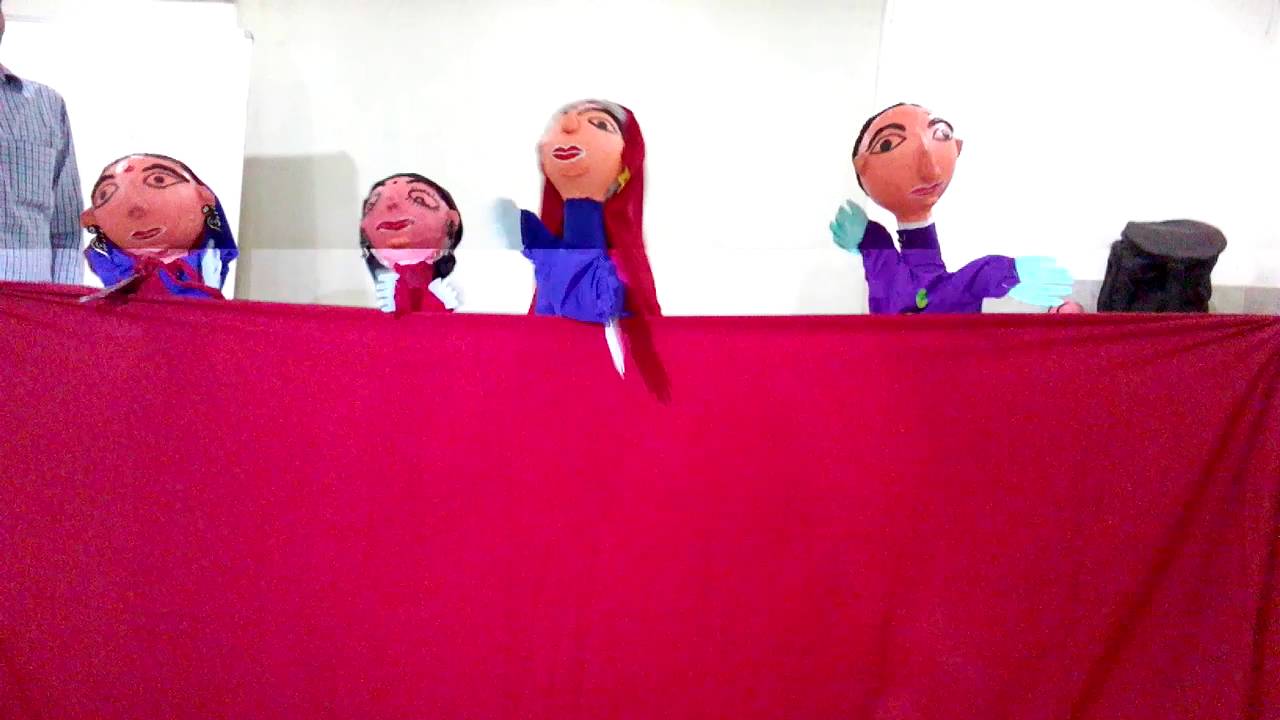
In this STEAM activity named as HORIZONS ROBO MUPPET IN OLYMPIC RALLY GAME, it was implemented Collaborative discovery method to experiment in unplugged activities of making puppet and scenes with natural materials and then work together to explore programming in digital environments to implement the design of improvised creations that will enhance educator’s creative imagination and their cognitive level.
MATERIALS NATURAL : pulp & tempera and fabrics,puppet decorations, embossed paper for the ralista cape. White illustration papers and black tape were used for the route .
ELECTRONICS FOR VEHICLE ????: 2 DC motors Or Arduino uno board 1 dual motor driver module L 298N Battery 9v + 4 battery 1.5 v 1 Battery case 2 infrared sensors. Um Jumper wires 1 on / off switch 1 adapter for Arduino 9 V Jack Battery accessory jack 5.5 Y 2.1 mm Ο VEHICLE FRAME: Chassis, 2 wheels, 1 rotating wheel, screws, distillers.
ELECTRONIC COMPONENTS: MICROBIT board. 1 servo micro FS 90MG Jumper wires 1 breadboard breakout for BBC microbit 1 mobile adapter from AC to DC.
SENSORS & ACTIVATORS An infrared sensor is used to detect a black line to ”read” the rally track mounted on a white background with black tape to create a track for the car to move.
ALTERNATIVE STORY WITH SCRATCH : use a scratch environment to create an alternative script to the original created for the show by exchanging heroes with different characteristics from the originals between the groups.
The way has been used to make teams involved online were been able to "bring to life" their artifacts expressively with the microbit platform, the groups were used the scratch environment to design emotional changes in their hero and were able to described changes in their scripting compare to first one was presented in the puppet show before. An alternative script with new emotional characteristic was born with scratch made of team members creativity.
SCRIPTING AN ORIGINAL PUPPET SHOW
The pedagogical value of this activity is reflected in the goals set and in the skills and behavioral attitudes in the teams that emerge from the collaborative work. The benefits are multiple for teachers and students, this is definitely the result of the process.
As part of the 2022 STEM Discovery Campaign, an eTwinning STEM project was planned using the “A Drop of Water Makes a Difference” learning scenario at the Scientix Resource Repository. The project was carried out under the name “Step by Step to Solution with STEM”. The project involved 13 teachers and 250 students from four different countries: Turkey, Italy, Portugal, and Poland.
Schools: Konya Ereğli Science And Art Center, Konya Ereğli Dumlupınar Scondary School, Konya Feriha Ferhat Koyuncuoglu Scondary School, Genova (GE), İtalyaICS Pra’ di Genova, Szkoła Podstawowa nr 1 im. Janusza Korczaka w Szprotawie Polonya, Alpaslan Ali Can Science And Art Center, Manisa Soma Science And Art Center, Agrupamento Escolas António Alves Amorim, Konya Akşehir Science And Art Center, Antalya Science And Art Center
Awareness among students about the problem of water scarcity and pollution in the world create.
Developing 21st century skills such as global awareness, environmental literacy, creativity and innovation, critical thinking and problem solving, collaboration, knowledge and ICT literacy, citizenship and different thinking
To encourage children in their active online participation
To strengthen their active participation through the assumption of roles
Developing your imagination
To observe them, to try them, to draw conclusions, to invent, to make constructions, to make contact with art, to present their work.
To manage to cooperate with the rest members of the group
Timeline
ActivitiesTime
Citizenship
40 + 40
Natural Science
40 + 40 + 40+ 40
Mathematics
40 + 40
Art
40
Music
40 + 40
Designing and Prototypeing
40 + 40
STEM Career Interviews: Architect
40
Collaborative Studies
40 + 40
Activities
First, our students and teachers introduced themselves to other partners. Afterwards, our students made logo and poster designs of our project. Afterwards, the students determined the logo and poster of our project with the survey. At the next stage, each team identified the “real-life problem” that it wanted to work on. We referred these issues to the survey. The students cast their votes. After all, “Water is very important for life. However, the earth’s water is gradually running low and polluting. Let’s find a solution to the water shortage.”
Citizenship (Brainstorming, discussion and preparation)
The students discussed the following questions with their teachers:
• How do you use water at home? At school?
• Give examples from your daily life: where do you think you are wasting water?
• Do you think there is enough water for everyone? How can we stop waste?
• Do you think water will end?
Students were asked to discover some information about water using an inverted classroom. The students presented the information they discovered using the “Canva” tool. And they uploaded these presentations to the eTwinning common area. In addition, they watched other presentations that were there.
Natural Science (Watch, discuss and build)
After watching the relevant videos, students were asked to think about reducing water consumption and waste, reusing water, recycling it and using alternative sources (Videos are here: Part 1, Part 2). Students were then asked to think about the following questions and create a Mind Map.
Is water important for living beings? Why?
Do we consume a lot of water?
What can we do, in our daily lives, to reduce water consumption?
How can we ensure the sustainability of water?
Students used “popplet” for the Mind Map. In addition, schools collaborated on this event, and each team added a section to the map.
Then they designed an experiment that showed that water evaporates when heated and intensifies when cooled. They shared it with friends in the common area. In this experiment, they understood the “water cycle” in nature. They worked with the “Science” teacher at this event. The event continued both at school and at home.
They designed and built a water filtration device using materials commonly found in the next activity. They measured the effectiveness of the filtration device using pH measurement methods.
A selection of images from project practice
They then measured the ph value of water and different liquids. They used a “phet simulation” for this.
A selection of images from project practice
Then they played Kahoot about the Water Cycle. This event was very exciting and fun for them.
A selection of images from project practice
Mathematics (Water Statistics in your school)
In this course, students read and wrote statistics on water addiction. They searched for information on various websites like this (here). Then they checked their water footprints. Then they made a poster using the results. They commented on the “Water Footprint Results” on the poster.
A selection of images from project practice
A selection of images from project practice
Our students created and conducted a questionnaire to understand the truth about the use of water in our school community. The Survey is here. They then created a poster with graphic information about the collected data.
A selection of images from project practice
A selection of images from project practice
They watched videos of water recirculation on the ISS. Video 1, Video 2
The students then prepared puzzles on the “conscious use of water”. They used “learningapps.org” and “wordwall.net” for this event.
Art (Creative activity)
In this lesson, they learned how to create colors that differ from the main colors, and They watched the videos (Video 1, Video 2). Phet practiced with the “Color Vision” simulation. They determined what color the person would see for various combinations of red, green and blue light. They defined the color of the light, which can pass through different colored filters.
Color after students watch videos they worked together to create a poster of the series. They described the “Water Cycle” on the poster. For this they used colored crayons and cardboard.
A selection of images from project practice
The students decided to work together for “World Water Day”. And they created a calendar. Every school team designed a month. In the design, they created “a picture and slogan on the water problem”. They worked collaboratively using the Canva tool. They finally created the 2022 Calendar. The calendar is here.
Music (Musical Water)
In this course, they collaborated with our school’s music teacher. We asked the students to find the water content needed for each glass to make a different sound. Ingredients: Cups of the same size, water, food dye, spoon or stick
Then they filled the glasses with different levels of water. They added food dye to further distinguish them. In this way, they created a “Water Xysytophone”. When it was over, they took a metal rod and slowly hit the glasses. They finally created a melody. The music teacher accompanied them using the piano.
In the first lesson, all the students made designs that they thought would solve the water problem. For this, some students used paper and crayons. Some students chose to design with the “tinkercad” program. At the end of the first lesson, they presented their designs to their friends. Together they decided on the best solution.
In lesson 2, they all built a prototype of a building that harvested rain. They also wanted to add wind roses to their building. They installed an electrical circuit inside the building. At the end of the lesson, they discussed the good and the bad of the prototype. They decided on aspects that needed to be improved.
In the next lesson, they met with the architect. The meeting was held online. How did he become an architect? What do architects do? they asked questions like. Later, they contacted our project. How do you design to make sustainable buildings? What materials do you use? What do you pay attention to regarding the use of water? They tried to understand the profession with questions like.
In the next lessons,
the Students did studies to tell people the truth about “water scarcity and water pollution” and to raise awareness about them.
Groups of 13 teachers and their teams created an “e-book”. They named the book “Adriana and Carlos In Search of Clean Water.” Here’s the ebook.
Then they created a “Public Spotlight”
They made a video message. This event was held in collaboration with all teams. The video discussed “we are running low on water, we are getting dirty”, “the future is in danger”, “what should we do about it for a better future”. And he gave me messages. This study was done with “canva”. Each team edited its own page. Here’s the “Public Spotlight“
Then the students designed a game for their peers using “Scratch”. The game moved with the slogan “Clean the Seas”. In this study, the teams worked collaboratively. Students were divided into mixed school teams. Each team was guided by a teacher. The IT teacher also supported the teams. The study took place online. Because each team had students from all four countries. The teams improved the next stage of the game. Finally, this game came about.
A selection of images from project practice
They planted trees at the last event. We wanted to collaborate with local governments for this event. That’s why we had help from the mayor of the city where we live. The mayor helped us with everything. He’s prepared the area where we’re going to plant trees. He dug holes. He brought the saplings ashore. They even took our students to the field by bus and also provided food and drink.
The event was attended by 90 students, 5 teachers, parents and municipal employees. Each student also planted at least 15 trees. In the end, 1,000 trees were planted that day.
Our students were very excited and curious during the project activities. They were given the opportunity to observe and experiment, draw conclusions, invent and take care of art. Critical thinking, creativity, problem solving and collaboration skills have improved. The students were actively involved in the project. On the other hand, intercultural interaction was provided as well as environmental literacy. And most importantly, awareness of water scarcity and pollution has increased. In addition, the families followed the project with interest. They even said their monthly water bills were down. The students left to discuss another project.
Numerous things have changed in several realms of life during the past few years. Working from home and teaching in a remote setting has become the new normal for many teachers, and although many have acclimated to their home workspaces and Zoom sessions, the situation was getting monotonous for all parties involved. It serves as a virtual reminder of the internet’s failure to support the in-person interactions that people need. Traditional video meetings and conferences are being converted by new technology into something that more closely mimics in-person discussions. Ella Rakovac Bekes, a math teacher from Croatia, found a fantastic web-conferencing application for enhancing student participation and involvement during online synchronous math lessons. An example and strategy for improving student engagement and creating a more engaging atmosphere via the usage of a free virtual world application while strengthening the social components of an online event during an interdisciplinary STEM lesson is described.
Putting it in context
In the light of COVID-19 pandemic, and ongoing war in Ukraine, national education ministries are adopting and will continue to develop ways to guarantee that students continue to receive education via other channels in the face of widespread school closures. Educators were and will continue to be needed to construct and manage distant learning activities employing videoconferencing capabilities in addition to learning management systems. Popular video conferencing systems are extensively used to engage with colleagues, family, and friends, as well as for work and play, professional growth, and entertainment. Communication has greatly enhanced as a consequence of the current surge in videoconferencing. Numerous studies have been undertaken on the psychological implications of spending hours each day on these platforms. Just as “Googling” has become synonymous with any online search, the word “Zooming” has become widespread, functioning as a general verb to replace the term “videoconferencing.” While social distancing mechanisms have kept individuals physically apart, virtual meetings have grown in popularity. Every day, hundreds of millions of events occur. According to some findings, video conversations weary individuals for at least four major reasons, resulting in the experience known as “Zoom fatigue.” The objective of this post is not to disparage any videoconferencing platform — I admire and routinely use products like Zoom – but to highlight how existing implementations of videoconferencing technology are tiresome and to offer interface enhancements, many of which are simple.
Teaching in online environment
With the acceptance of the new normal situation and the way the pandemic has changed everything, we still sometimes teach online. The reasons are various, due to the lack of space because state exams or various competitions are held. Due to justified absences of subject teachers or due to frequent isolations of entire classes …The most commonly reported negative aspect of online teaching include a lack of social connection, a lack of self-motivation, frequent technical issues, a lack of resources, and non-adherence to planned lectures. Student satisfaction research is essential in both conventional and online education. Student satisfaction is a vital component in the process of determining success criteria in online education.
Videoconference and synchronous learning environment
In synchronous remote education, videoconferencing may be a useful tool for teaching and communication. Furthermore, thanks to the multimodal capabilities of web-based videoconferencing technology, instructors and students may connect with one another through audio, visual, and spoken communication. This minimises the ambiguity inherent in text-only communication and promotes psychological involvement, which may result in collaborative work functioning at a level equivalent to face-to-face communication. As a result, using videoconferencing in distance education may assist in creating a learning environment that is more analogous to a traditional classroom.
From the viewpoint of social constructivism and sociocultural theory, videoconferencing technologies have the potential to enhance the online learning and teaching experience.
According to multiple research, online learning during the pandemic resulted with a lack of desire to study, a high level of stress, and a greater dropout rate. One explanation for this is because studying from home lowers social connection in the classroom. Social presence was associated to student pleasure in three constructs: social sharing, open-mindedness, and social identity.
Students’ participation in Zoom, on the other hand, was dismal, as we all know from personal experience. When students were summoned, they would occasionally switch off their webcams and not reply. The researchers concluded that the main factors contributing to a successful blended learning experience are effective communication between online students and the instructor, followed by communication between online students and classroom students, online student engagement, instructional activity redesign, and audio quality.
GATHER TOWN application
Gather Town is a web-conferencing application similar to others, but with the added benefit of visualising the virtual “room” the user and its colleagues are currently occupying, as well as the ability to move around and interact with other participants based on their physical locations in the room, just as it would be in real life.
Gather is fully spatial—you must be digitally “near” to someone in order to hear them, allowing for several discussions in one location and wonderful impromptu connections. This is similar to happy hours and conferences, when large groups of people break off to interact in smaller groups. It is a two-dimensional map platform in which users control an avatar that traverses across space.
When your avatar meets the avatar of another person, you are instantly invited to a voice or video discussion with that user. As one avatar approaches or leaves the “talking” distance of another, his camera rectangle becomes slightly translucent until the avatar walks away from the range, at which point the rectangle, and the option of chatting with the other, evaporates altogether.
Screenshot of Gather Town interface during the lesson
Gather’s fundamental goal is to build the finest Metaverse possible for mankind. Unaligned business models have a history of creating profit at the cost of the user’s well-being. A Metaverse that works on a free, open platform, akin to the Internet, benefits society the most.
Gather’s development team has included a few pre-configured games in their Object Picker. These games are set up to enable users to join private games hosted inside the Gather area, enabling them to play while video chatting with others. There is a commonly known game of Tetris from 1980’s. You may design your own environment, change an existing one, and even add interactive items like as white boards, video games, banners, and webpages.
A screenshot of fun element within the Gather Metaverse
Gather Town was picked because of its multiple advantages. It offers a free version to users, is self-contained, may be used in an educational context, integrates gamification components (it is, after all, a game), and, most crucially, nudges verbal dialogue.
The one downside at the time is that its full capability is only accessible on non-mobile devices such as laptops or desktop PCs.
Encouraging social skills with interdisciplinary STEM lesson
One of the criteria that contribute to student motivation is a sense of belonging and respect. Pupils who are normally introverted and are not the class’s loudest members will have a more difficult time acquiring social skills via video conferencing with other students. During online teaching, teachers utilise their approach and available opportunities to create and maintain a pleasant communication culture among students and with the instructor. However, facilitating and encouraging social skills in all students remains the most challenging component of online education.
Taking this into consideration and the fact that engagement and motivation in STEM subjects and lessons were a major issue prior to this “new normal,” it was vital to construct a lesson to address these issues.
The purpose of creating an interdisciplinary lesson was to practise vectors and associated mathematical concepts, get familiar with the region’s intangible cultural heritage, and learn about Croatian literacy. All of this, however, had to be accomplished in a distant educational context. While remote education as a discipline responds to the disruption caused by the COVID-19 outbreak and videoconferencing technology improve their usefulness, it is vital to recognise human agency during this transition. Humans act and make decisions in reaction to their experiences, reflections, self-determination, and motivation. According to social constructivism, learning comes as a result of interactions and experiences with others. Learning takes place within a complex social structure, and people’s learning and development are impacted by their involvement in cultural activities. Videoconferencing widens the boundaries of classrooms, blends the presence of virtual and real classrooms, and overcomes the physical limits of conventional classrooms. This increases students’ touch with their surroundings, classmates, and instructors, broadening their educational experience.
When I discovered Gather Town, I was certain that the social interaction would be powerful enough to attract kids in this specific session and keep their attention throughout. This had an extra benefit: kids developed an appreciation of what it was like to play video games in the 1980s.
Gamification, Self-determination Theory and Avatars
While gamification is not successful in and of itself, various game design components may elicit a range of different motivated reactions. Using a self-determination theory framework, the consequences of different combinations of game design characteristics were explored.
Self-determination Theory (SDT) is a motivational theory of personality, development, and social processes that investigates how social contexts and individual differences facilitate various types of motivation, particularly autonomous and controlled motivation, and thus predicts learning, performance, experience, and psychological health. According to SDT, all humans have three basic psychological requirements that must be addressed in order to operate and be happy: competence, autonomy, and relatedness. Satisfaction of these essential criteria promotes the development of optimal motivational traits, independent motivation, and intrinsic goals, all of which lead to psychological well-being and effective interaction with the environment.
Badges, leaderboards, and performance graphs all affected competence and autonomy in terms of job meaningfulness. According to this study, avatars, a compelling story, and teammates all had a positive influence on social relatedness.
The pupils are expected to discover different artefacts while roaming the castle as miniature avatars with names hovering over their avatar-heads. Each found object has a math problem and multiple-choice answers, as well as hints. To obtain the proper clue, students must solve a math problem and choose the correct answer. The who-what-where worksheet should include all of the answers and hints. After crossing off “Who,” “What,” and “Where,” just one clue remains in each column. The last Who, What, and Where is a true narrative of a Croatian writer who lived in a specific place, and it also serves as the final answer.
I reasoned that the distinctive gamified aspects of Gather-facilitated classes could only generate motivating effects if participants were aware of their presence. A meaningful tale, for example, that is presented to elicit emotions of social connectivity, cannot fail since players are unable to skip essential screens because they are interwoven into the narrative.
What happened with using this app?
Before the lesson utilising this software, students were polled briefly about their past experiences with and attitudes about video conferencing in online classrooms. The majority of them claimed that they are demotivated to engage in video calls, annoyed by the prospect of engaging in video calls, think that video calls are meaningless or offer no value, avoid video calls whenever possible, and even when they are “present.” A substantial proportion of them, 92 percent, said that they had had no contact or spoken conversation with any of the call participants.
The satisfaction, narrative, social interaction (communication style), and attitudes regarding the Gather Town classes were evaluated using a survey-based questionnaire with a sample of 56 students aged 15–17.
The held lesson, which included stimulating gaming aspects, had a positive impact on learners’ communication, engagement, and learning interests, as well as supporting them in establishing self-directed learning. These opinions directly reflect the success of Gather Town teachings. Gather lessons, according to the opinions, have distinct traits such as the degree of enjoyment, ease of access, ease of use, and level of communication. Only 2% of students stated that they had no oral contact with others. As a consequence, teachers must take use of these advantages while conducting video conversations (conference calls).
CONCLUSION
Web-based videoconferencing system design and optimization should take a more human-centered approach. For example, the next generation of web-based videoconferencing systems should enable learners and educators alike to make choices and harness technology to improve the virtual learning experience rather than restrict it due to system capabilities constraints. Another related problem is how to bridge the gap between educators and students, students and students, and students and material. This is one of the most serious challenges that videoconferencing systems will face in the future. All of these challenges were effectively overcome with the prepared lesson that included gamification, intangible cultural heritage, and the web-conference software, Gather Town. According to the conducted lesson, establishing in-person contacts with avatar usage enhanced students’ social engagement as well as lesson satisfaction. Furthermore, it means that different types of social interactions impact learners’ behaviour when it comes to gamification. Gather promoted social relationships via the use of gamification and collaboration inside an online learning environment utilising a videoconference technology.
Rising temperatures make the planet hotter and also knocked longstanding precipitation patterns off balance by altering how much water cycles between earth and the sky.
Learning Objectives:
Students will be able to:
Know the difference between wheather and clime
Analysis and comparing data visualizing
Elaborate a solution Nature Based (NBS)
Activities
The students start to work together observing whether of our country, Pomigliano D’Arco, a small town located 37m above sea level with a warm and temperate climate. Rains were particularly abundant and frequent in November and December by analyzing data collected by our meteorological station. They observed that in the last 15 days of December 101.1mm of rain fell which is the same amount measured in the last year determining (flooding) due to the inadequacy of collection systems. The excess flow rates discharged to the surface by the pressurized sewer can fill any depressions present on the ground, or flow-through preferential routes, creating a flow network that in urban areas affects roads, sidewalks, natural depressions and small streams. When rainfall is particularly intense, conditions of increased hydraulic risk are generated which impact people and infrastructures. The students understood that the reduction of permeable areas – reduction of vegetated areas – reduction of surface reservoirs is the problem.
Main results and conclusions
Highlights how the transition from agricultural land (natural cover) to a completely waterproofed surface (square, asphalted and/or cemented road, etc.) leads to a progressive reduction of the infiltration coefficient c. the. (represented by the amount of water that infiltrates in conjunction with meteoric precipitation) and an increase in the surface runoff d.s. (part of precipitation flowing to the surface).
Example of calculation
Asphalted surface – schoolyard c.i. = 15% d.s. = 55% (with peaks of up to 80%).
The increase in the size of surface runoffs is evident where the soil replaced by impermeable areas. It should be borne in mind that during particularly intense hourly rainfall (in the order of 70-80 mm / h) the urban drainage system can go into crisis, causing localized flooding that seriously impacts anthropogenic structures. The forecast implies that the amount of water that will fall in the coming years will be less and less, despite the damage from flooding, floods … have been growing in recent times.We can give an explanation to all this, saying that on days when it rains, the rain is very intense, which cannot be disposed of by the current sewage works.
The students use the NBS methodology elaborate a project on infrastructures, correlating nature and the urban environment. The idea is to create urban drainage channels able to drain excess rainwater along the edges of the roads (Figure ).


 DATE: 10/1/2022 to 30/3/2022 CREATOR: Stavrina k.