Students often see Maths as a boring or even scaring subject. Kids who have difficulties with this subject can benefit from creative Math activities that involve games and Art. To help them to look at Maths from different perspectives and to involve them all, from the most motivated ones to those with special educational needs or disabilities, we developed a STEM activity in which Maths, Technology and Art meet.
Schools all around Europe challenged each other in a Tangram contest.
Students worked in pair with a mate from another country to share tangram images and they integrated them in a piece of Art.
Partners’ schools
L’estagnol Sainte-Eulalie – France
AEAP, EB1 Sarzedas – Portugal
I.C. Merate (LC) – Italy
I.C. Villaputzu (CA) – Italy
Kocatepe Primary School Ankara – Türkiye
The activity
goals
develop a positive attitude towards Geometry
gain comprehension of spatial relationships
understand how geometric shapes can be decomposed
develop spatial rotation and translation skills
learn the meaning of equiscomponibility
develop problem solving skills
appreciate the international dimension of STEM
Age of students
7 – 11 years old
Materials
PC or tablets, online tangram tools, physical tangram, sheets, colored pencils or felt-tip pens
Process
We started our activity by pairing up students.
In each team, the students realized a drawing using a Tangram online tool and shared it with their mates.
Their coworkers reproduced the drawing using a physical tangram made either by wood, cardboard, plastic or paper. They also added a handmade drawing as a background, therefore creating a suitable landscape for the Tangram image.
At the end, everyone could see that their virtual work became a physical piece of Art in another school.
Art activities combined with Geometry have significantly contributed to developing the students’ creativity and imagination and brought them closer to Mathematics in a playful and fun way.
The possibility to work in a team with students from other countries kept their motivation high and, consequentially, they developed the ability to work in a team.
Combining work using technological tools with manual Art activities represented a further stimulus to involve the students, encouraging them to work to the best of their ability.
In this post I will explain how I introduced STEM contents into subject that I teach Italian language, in order to connect the study of Italian to real life situations. As Scinetix Ambassador, I want that my students find a solution of the problem using research work, critical opinion, their strong sides of personality, peer collaboration, etc.
According to the school plan and curriculum for Italian language in 8th grade, my 15-year-old students had to learn words about energy sources and energy consumption in Italian. I decided not to use the text in their student book and found in the Scientix RESOURCE REPOSITORY great resource “GETTING TO KNOW ENERGY” in Italian http://www.scientix.eu/resources/details?resourceId=3072.
Learning Goals of our lesson were:
Understand what energy is, what types of energy there are, and the different forms of energy
Explore cause and effect as it relates to energy use
Compare how children around the world use energy to identify similarities and differences.
Warm up activity (10 minutes) was watching video about energy in Italian “Le fonti di energia”: https://www.youtube.com/watch?v=fFmijtXf95s, which helped them recall the knowledge of physics about energy types.
During the main part of class (25 min of “reading and comprehension”) my students were reading the text in Italian “Impariamo a conoscere l’energia” from the school projector and trying to understand it: http://storage.eun.org/resources/upload/657/20170727_192744893_657_Energy%20tips_September%202010_final_PR_09092010_IT.pdf. They were divided into groups and each group had to analyze their section from the text. I was asking questions to help them to understand the key words and global meaning of the resource.
They were supposed to link the types of energies to the images, determine whether the sentences written were correct or false, and share ideas on how to reduce energy consumption.
“The search for the best garden” is a project organized during April 2022 with ten-year-old students from Primary School Mosa Pijade, located in Zagubica, Serbia with class teacher Zvonimirka Jovicic. The activity has interdisciplinary character and aims to make distinguish between favorable and unfavorable conditions for agriculture. Project is based on problem based learning, cooperative learning, experiential learning and student-led classroom.
There are many available, but not high-budget, teaching aids that have been used, such as: digitized material for testing hypotheses, digitized material for collecting students ‘opinions on activities, digitized material for exchanging students’ opinions, plant seeds, various types of land, jars, bottles, Coca – cola juice, ice cubes, syringe, cotton wool, ash, vinegar, kitchen salt and more.
The complex topic related to the environmental problems that humanity faces for ten-year-olds was presented through a series of experiments that they conducted, and based on the conclusions they reached, they gained knowledge about what a greenhouse is, how the greenhouse effect affects global warming, what salinization is and how it affects soil fertility, how soil enrichment can be increased slash and burn by using wood ash from burning wood (the area where the school is located is rich in forests and most households use wood for heating during the heating season).
The second part of the activity, in addition to the educational one, also had a creative character, and the aim was to find algorithms for the creative transformation of waste from the kitchen and classroom.
FOR OR AGAINST FACTORIES?
Students are motivated to work by reading an imaginary letter in which an unknown character asks for help regarding the dilemma “FOR AND AGAINST FACTORIES”, which is designed so that students state the reasons for building a factory in the village and reasons against building a factory in the village. It was used to exchange experiences linoit.
HOW DOES LAND DIFFER?
During the next stage, students get a new challenge and they are asked to give specific suggestions on the following issues:
Should an investor who, due to the proximity of water, wants to start factory production on the site where the field plot is currently located, should be approved for such an endeavor?
If starting production is still possible, what would be the most appropriate conditions for relocating crop production?
Would such production be possible in other parts of the world?
The conversation concluded that it is necessary to examine how the proximity of the factory production affects the pollution of the environment, with special emphasis on the composition of the land that would be chosen for the continuation of the mentioned field production. In this regard, the students had the opportunity to learn how salinization occurs, but also how the increased concentration of CO2 in the atmosphere affects the composition of the soil. In order to understand how salinization of the soil occurs, the students were given the task to add a solution of salt and water to the soil brought from a certain location, and then repeat the procedure several times after the water has evaporated. The students simulated acid rain by adding vinegar to the water.
The basic characteristic of such organized learning is setting a hypothesis at the beginning of each research activity and verifying or rejecting it at the end of the research.
During the next activity, students were given the task to perform the following experiment: put three different soil samples in three identical glass colorless jars: a mixture of soil and ash (first sample), soil taken from a garden near the school (second sample) and “saline” soil (third sample) which arose as a consequence of experimentally performed salinization. It was further necessary to put three beans in water, and after swelling, put one grain in each jar with tweezers so that you can see and follow its germination through the glass. Water the plant in another jar with a solution of vinegar and water as a simulation of “acid rain”. Follow for five days and record. Finally, a discussion was organized on which of the selected samples is the most favorable for plant cultivation.
During the observation, the following list (LINK) was used to record the observed.
During the next stage, students get a new challenge and they are asked to give specific suggestions on the following issues:
The high concentration of salt in the soil adversely affects the growth of plants;
Ash can be used to enrich the soil;
The concentration of CO2 in the atmosphere contributes to the global warming of the planet, which results in the warming of icebergs, which raises the level of the ocean and sea, which could destroy many settlements by immersion;
“Acid” rains adversely affect plant development;
The tendency of the roots of the plant to germinate in the jar is proof that the plant needs water to survive, and the green shoot facing upwards is proof that the plant also needs sunlight to develop.
Along with this activity, students had the task to collect land from different locations and to investigate whether the soil differs in humidity and looseness, so the next experimental activity aimed to investigate whether soil moisture and looseness affect vegetable and field crops culture. We sowed one bean and one corn in two jars. This was followed by observation and recording of data for several days.
During the next stage, students get a new challenge and are asked to give specific suggestions on the following issues:
Different types of land are different for different field and vegetable plants.
DIRTY AIR DETECTORS
In addition to selecting the type of soil with appropriate permeability and looseness, it was necessary to detect the location, and organized an activity called “Dirty air detectors” which included two interrelated (the procedure is described in the Google forms material) on which students concluded that the distance from the roads and the “distributors” of dust are the main allies in choosing the location to continue production.
ICE MELTING
As a logical continuation of this, there was an activity related to the “Ice melting” the procedure is described in the Google forms material. At the end of this research activity, we came to the following conclusion:
The production of field and vegetable crops must be away from roads and factories.
During the next activity, students had the opportunity to observe light permeability by noticing that greenhouses are covered with colorless nylons, while black nylons are used between rows to cover to prevent weeds from sprouting.
In addition to these activities, the students had the opportunity to explore how organic waste can be processed into compost and used to enrich the soil, on the one hand, and reduce waste at landfills, on the other hand.
In the second part of the project, students had the task to explore or independently design ways of creative use of waste from the kitchen and classroom. This activity was also used to develop algorithmic thinking because students were required to present the algorithm of making a certain subject in a few steps.
This way of working is interesting for students, and above all it contributes to connecting teaching with a real life context. The project is characterized by, in addition, minimal financial investment for its implementation with students, does not require extensive preparation and engagement of teachers, and is very suitable for involving other experts in working with students (agronomists, environmentalists…).
The students gained their knowledge by working on tasks in the Google forms digital tool. This digital tool was also used for student evaluation of the project.
Photos from the realization are available at this link.
AS the 21st century requires communication, collaboration, creativity and critical thinking skills, the STEAM interdisciplinary approach is also an ideal choice for pre-school education in the apprenticeship. Learners are required to learn the art of pre-school pedagogy with both her theoretical background as well as the practical part that is inextricably linked to creativity, teamwork and of course the communication with the toddlers who will teach but also between colleagues.I believe it’s a way of training that will enhance the skills of young educators and will enrich their professional quiver with modern tools and methods of pedagogy, according to the needs of the new era.
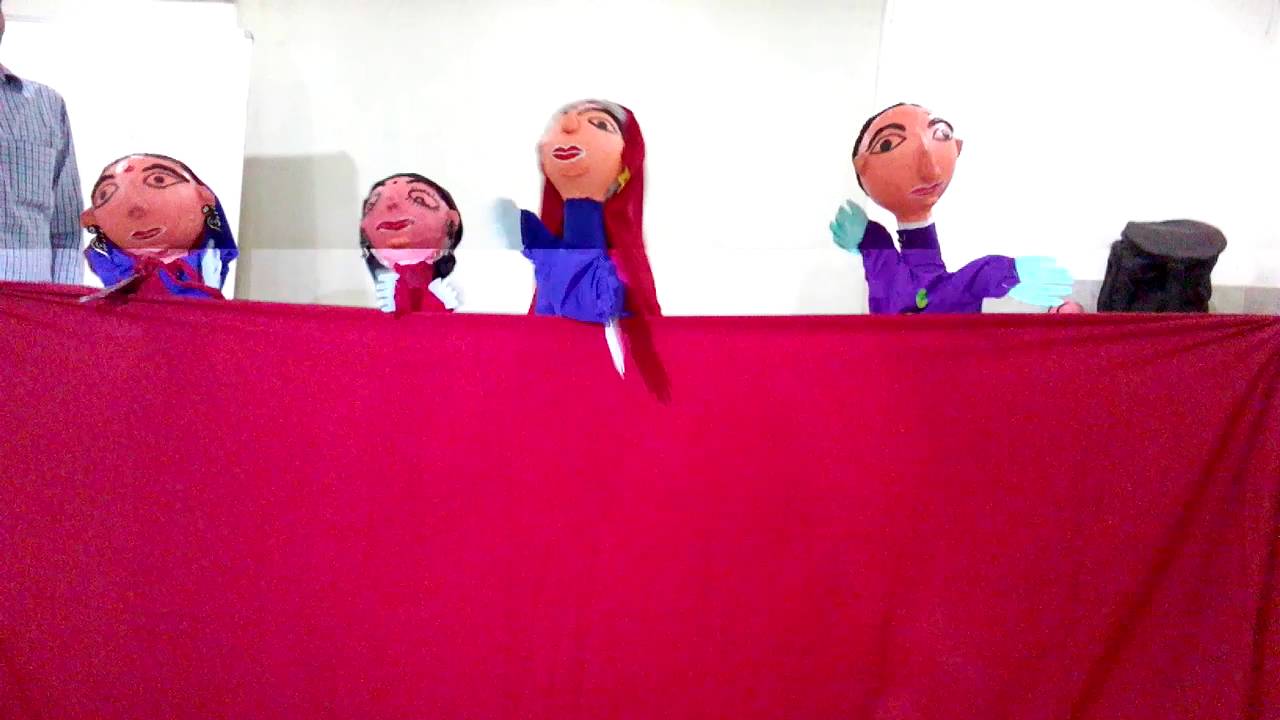
In this STEAM activity named as HORIZONS ROBO MUPPET IN OLYMPIC RALLY GAME, it was implemented Collaborative discovery method to experiment in unplugged activities of making puppet and scenes with natural materials and then work together to explore programming in digital environments to implement the design of improvised creations that will enhance educator’s creative imagination and their cognitive level.
MATERIALS NATURAL : pulp & tempera and fabrics,puppet decorations, embossed paper for the ralista cape. White illustration papers and black tape were used for the route .
ELECTRONICS FOR VEHICLE ????: 2 DC motors Or Arduino uno board 1 dual motor driver module L 298N Battery 9v + 4 battery 1.5 v 1 Battery case 2 infrared sensors. Um Jumper wires 1 on / off switch 1 adapter for Arduino 9 V Jack Battery accessory jack 5.5 Y 2.1 mm Ο VEHICLE FRAME: Chassis, 2 wheels, 1 rotating wheel, screws, distillers.
ELECTRONIC COMPONENTS: MICROBIT board. 1 servo micro FS 90MG Jumper wires 1 breadboard breakout for BBC microbit 1 mobile adapter from AC to DC.
SENSORS & ACTIVATORS An infrared sensor is used to detect a black line to ”read” the rally track mounted on a white background with black tape to create a track for the car to move.
ALTERNATIVE STORY WITH SCRATCH : use a scratch environment to create an alternative script to the original created for the show by exchanging heroes with different characteristics from the originals between the groups.
The way has been used to make teams involved online were been able to "bring to life" their artifacts expressively with the microbit platform, the groups were used the scratch environment to design emotional changes in their hero and were able to described changes in their scripting compare to first one was presented in the puppet show before. An alternative script with new emotional characteristic was born with scratch made of team members creativity.
SCRIPTING AN ORIGINAL PUPPET SHOW
The pedagogical value of this activity is reflected in the goals set and in the skills and behavioral attitudes in the teams that emerge from the collaborative work. The benefits are multiple for teachers and students, this is definitely the result of the process.
Our Happy Kids With STEM project aims to increase our students’ interest in science, technology, mathematics and engineering. Apart from this, it is aimed to train students who can think creatively, solve problems and have 21st century skills by integrating STEM disciplines with each other. In our project, Anna discovered a new planet in space. that’s why she wants to send a reconnaissance vehicle to the planet. However, due to the fuel problem, this vehicle has to move without fuel. With a dream she saw, she solved this problem with a magnet. So she invented the magnetic car.
Our Goals
With this project, we aim to equip our students with 21st century skills. In particular, it is aimed to gain problem-solving skills through project-based learning. Creative thinking is aimed with learning by design. It is aimed to make new designs by using the tools necessary for their imagination and daily life skills. In addition, it is to help the development of hand-eye coordination by making movements that require object control. It aimed to raise awareness about sustainable energy and zero waste. Thus, increasing sensitivity to the framework is among our goals.
Interdisciplinary Collaboration
Students learn about magnetic energy, repulsion and pull of forces in the field of science. While learning the layers of the atmosphere, he also learns about the clouds. In addition to the concept of time in mathematics, he also learns to measure length. Technology system researches are provided. In engineering, he designs and makes cars that work with magnets. It also develops their vocabulary.
Results
Students’ designs and learning throughout the process are evaluated. They also learn through interdisciplinary collaboration in terms of language development as well as science, mathematics, technology and engineering. With these, it is emphasized that magnetic energy is sustainable energy. It is emphasized that it leaves zero waste.


 DATE: 10/1/2022 to 30/3/2022 CREATOR: Stavrina k.