STEAM WEEK

Activity Title: V Environmental STEAM Maker Week

Date: From April 25 to 29, 2022

Author: Jose Maria Beltran Gomez

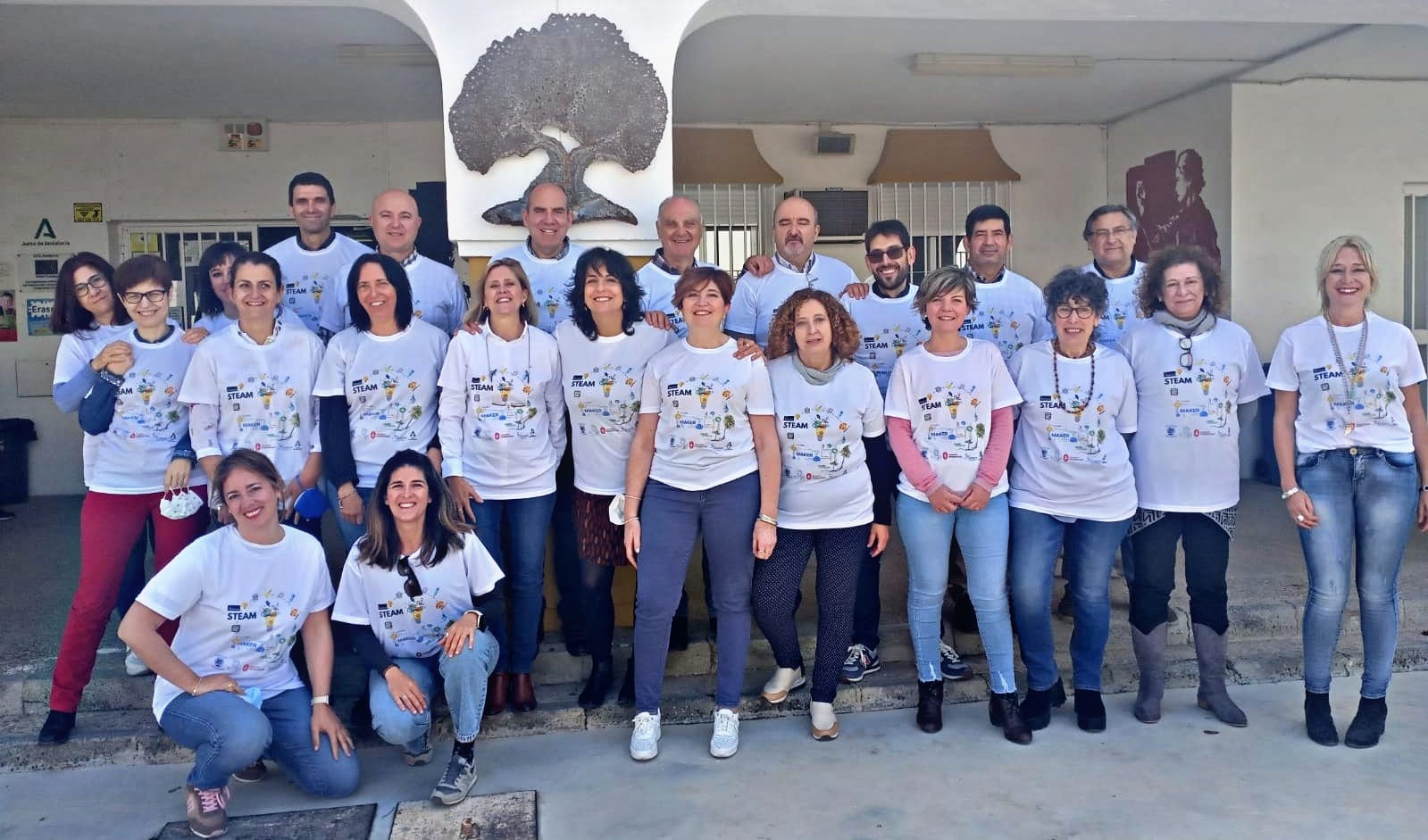
During the last week of April we celebrate a thematic week related to STEAM disciplines to awaken the scientific and technological vocations of our students and ignite the flame of curiosity and learning.

We believe that science and technology are nowadays indispensable tools for economic and cultural development in any society. To be able to access what we call the “knowledge society”, it will be necessary to develop and increase the number of subjects.

Although we work daily from all disciplines in a transversal way on everything related to STEAM, it is considered essential to create a few days where everything that is done in the centre is focused on science, technology, engineering, mathematics, art, the environment…

On this occasion, the following activities were planned:

– Conference on the Protected Spaces of the Province of Jaén. Knowing what is close to us will make us love and respect it even more. The saying “think globally but act locally” is kept in mind. On this occasion we had the presence of a biologist, director of the Despeñaperros Natural Park.

– A theatrical performance titled “Alunizante”. A play which, through a dialogue and a presentation, shows the history of man’s journeys into space, as well as the future projects that are to be undertaken to visit the moon and even Mars. In a pleasant, approachable way and with touches of humour, the students are infected with the desire to learn a little more and to acquire knowledge of everything related to aerospace disciplines. We have the presence of a theatre group called Teatro La Paca, who thanks to their experience and dedication to the school environment are able to capture the students’ attention and involve them in the story.

– Maker Workshop. During the school year, the pupils have been developing a series of workshops in the classroom related to energy, electricity, mechanisms, programming, 3D printing, etc. Subsequently, the students have developed a script for their presentation to other students about what they have been studying during the previous months. To do this, students from 6th grade Primary School were invited to visit the centre and receive various workshops given by students from our school. The maker workshop consisted of ten corners where work was carried out:

o Construction of a magic can.

o Construction of an electric sweeper.

o Construction of a doodling robot.

o Making greeting cards using electrical circuits made of paper.

o Makey Makey. Fruit piano, interactive book, musical collage…

o Microbit. Programming the board and setting up the maqueen robot.

o Scratch. Programming workshop.

o Stop Motion. Making a short film using the stopmotion technique.

o Scornabot workshop. Programming for a robot to move around a gridded board following a series of routes and encouraging computational thinking.

o 3D printing workshop. Use of TinkerCad and Thingiverse. Downloading of parts in stl format, preparation of the part and printing.

The students have been involved in a very important way, tasting the benefits of teaching and the importance of science and technology for their future.

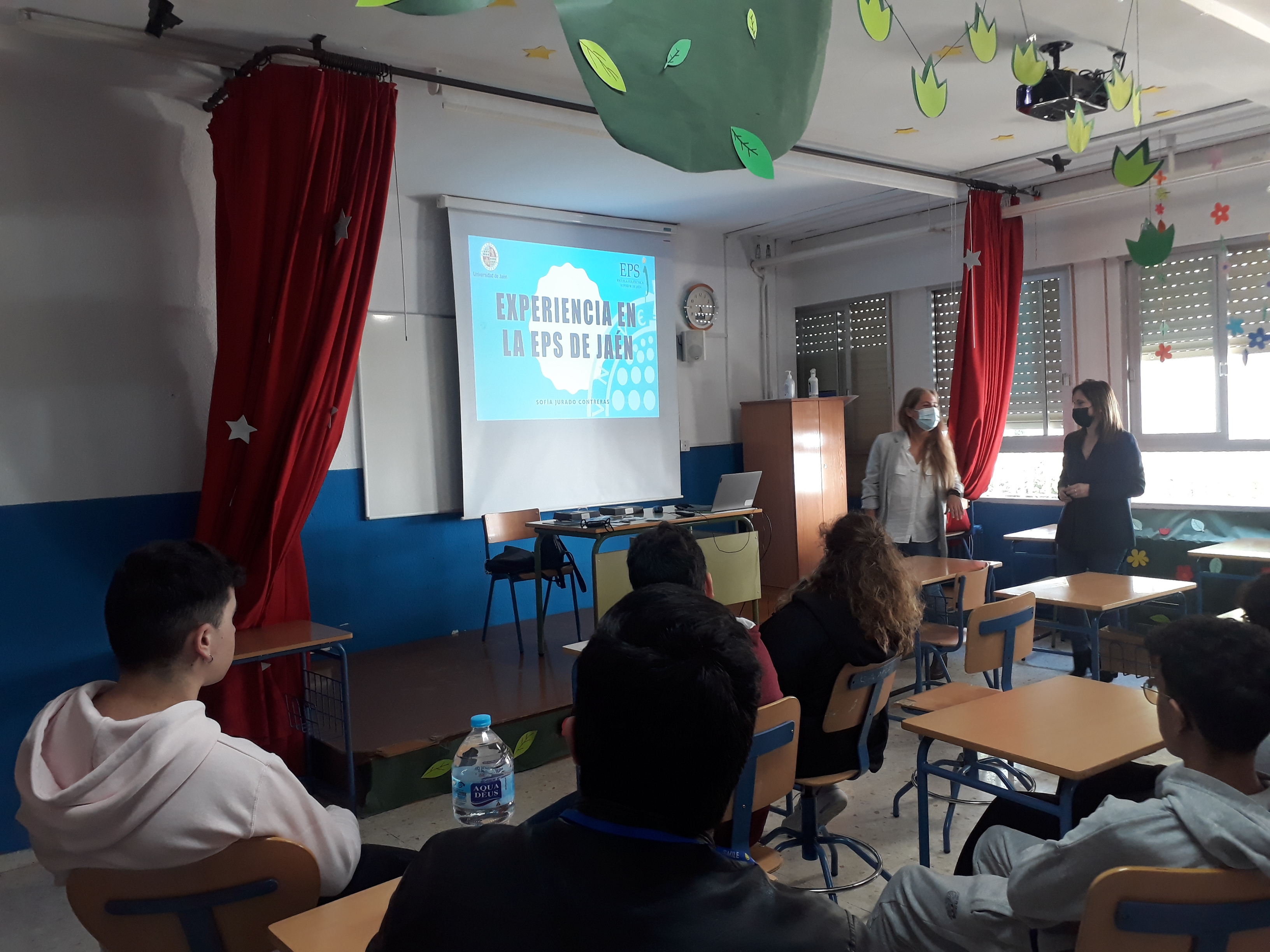
– Lecture given by professors from the Polytechnic School of the University of Jaén to explain why to study engineering and the projection it offers for the future that is on the horizon.
– Toys with science workshop, where through a series of experiences, practices and the use of various toys they were able to see the involvement of science in their functioning and the importance of this in our environment.

– Waves, sound and music workshop. Each of these aspects has been worked on, discovering through simple practices and experiments how waves, sound and therefore the generation of music are produced. The students were very involved.

– Recycled paper workshop. A session was held in which the pupils, following an established procedure, made paper from used paper. It has been a real discovery for them and they have learnt the importance of taking care of our resources, using them sparingly and putting them into circulation for later use.

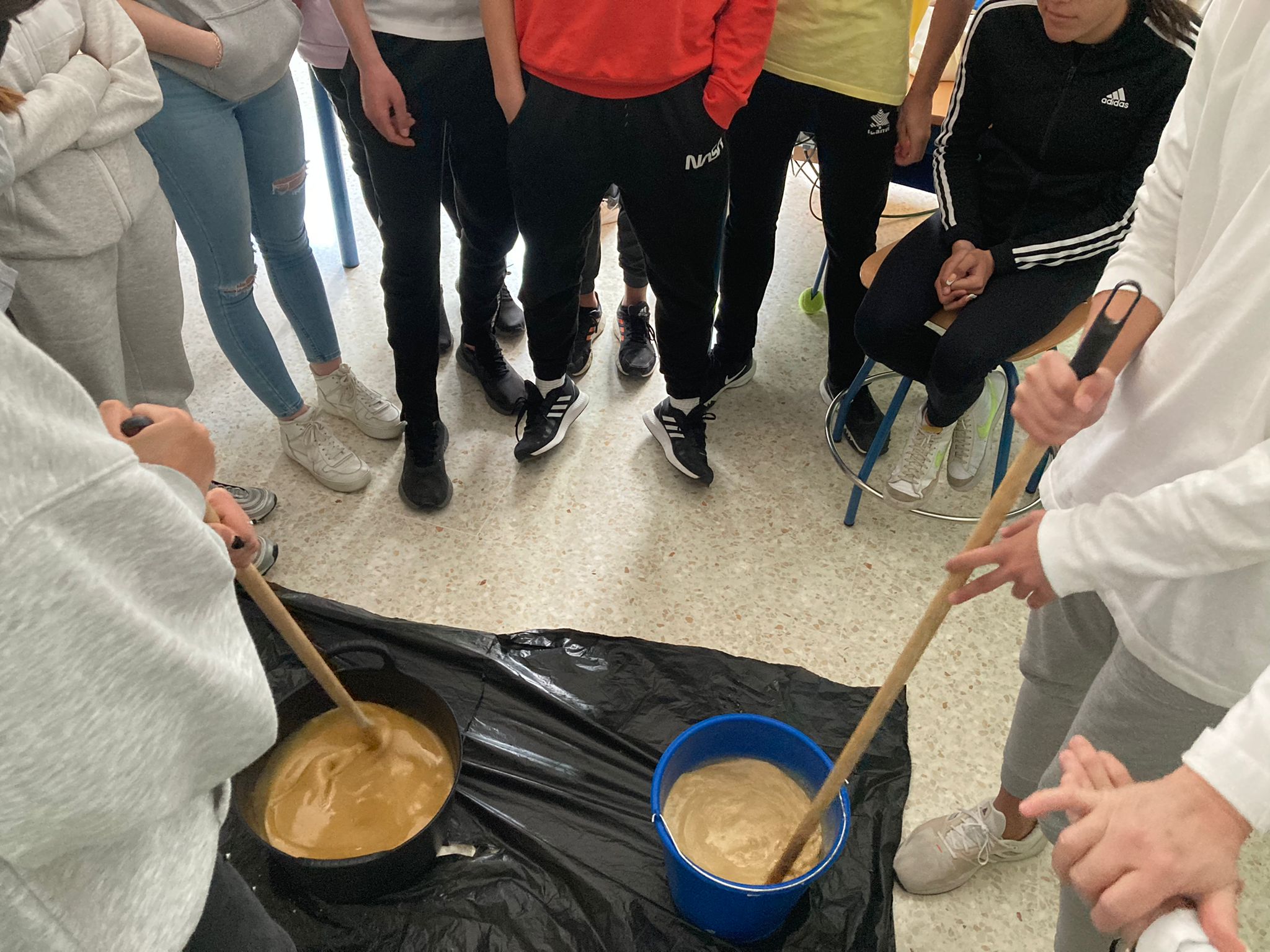
– Homemade soap workshop. Soap was made from used oil, which will later be used for washing clothes. The pupils, guided by the science teachers, followed a series of steps to obtain this resource.
– Other workshops: Game on Climate Change, aloe vera, geometric hilarograms, creation of comics of scientists…

– Hiking. Outings to existing environments around the town to get to know the flora and fauna and to promote the enjoyment and care of our immediate environment based on respect, knowledge and fun.

– Poster exhibitions with information related to the environment, climate change and energy, where pupils, with a series of educational guides, have learnt about various aspects related to science, technology and the environment.

All this is necessary to surprise, excite and encourage curiosity in our students, which are the fundamental pillars, according to neuroscience and neuroeducation studies, to awaken the desire to learn in our students. In addition, it is of great importance to create monothematic sessions related to STEAM disciplines in order to bring scientific and technological knowledge closer in a different way.
STEM FOR SUSTAINABLE

Zübeyde Hanım Kindergarten Learns with STEM school activity's Zero Waste Tool plan application prepared in accordance with the engineering Design Process pedagogy
https://denizlizubeydehanimao.meb.k12.tr/icerikler/zubeyde-hanim-anaokulu-stemle-ogreniyor_12718394.html

ZERO WASTE VEHICLE 
OVERVIEW 
Context: The disposal of waste without being evaluated in the recycling and recovery process
It causes serious resource losses in terms of both material and energy. World
As the population and living standards increase, there is an inevitable increase in consumption.
and this situation increases the pressure on our natural resources, upsets the balance of the world,
our resources are not able to keep up with the increasing needs. Given this situation, natural resources
The importance of efficient use becomes even more evident. That is why in recent years, all over the world
zero waste implementation studies both individually, institutionally and throughout the municipality
is spreading. Preventing waste in the world, making our natural resources more efficient
use, prevention of waste generation by reviewing the causes of waste generation or
minimizing it, and in case of waste, separating it at the source and recycling it
In order to put the current system on a more regular, systematic and applicable basis at the point of
started with the waste principle. A vehicle that collects and separates waste within the scope of the zero waste project
they use to design.
Engineering Design Problem: A tool to collect and sort waste as part of a zero waste project
design.
Criterion: The collected wastes should be properly separated according to their types.
Limitations: 
OVERVIEW
COURSE DESCRIPTION PURPOSE
1 Context Environmental pollution, soil pollution, recycling and
Learn about zero waste. Causes of environmental pollution
PROBLEM
2 Material discovery How to create a zero waste tool of different materials
IMAGINE it can be used
3 Designing solutions PLAN a tool that collects and sorts recycling waste
and to CREATE environmental pollution, soil pollution, zero waste and
use information on recycling types
4 Test the Data Analysis Model tool and identify ways to IMPROVE the design
5 Expansion Find ideas for additional exploration
engineering for students
Tiny engineers will need varying degrees of adult assistance throughout this challenge.
Asking young engineers about their ideas and work helps adults learn
It's a good way to support it.
PLANNING
Purposes:
• To determine how environmental pollution occurs and what is the waste that pollutes the environment.
• The 5-step Engineering Design Process (Ask, Imagine, Plan, Create,
Develop) to understand and apply.
• To discover the characteristics of the wastes and to determine how they will be separated.

LESSONS
LESSON 1: DESIGN CONTEXT: AIM: To learn about the environment, environmental pollution and soil pollution. Information about recycling and zero waste obtain. ASK questions about environmental pollution.
MATERIEL • TV screen, computer, whiteboard or projector • Worksheets • Crayons, scissors, glue. 
PREPARATION: 
• A few days before the children's families start implementing the plan, your STEM plan and forward a digital or hard copy of the worksheets.
LESSON: 40-50 min. 
ENTRY: 10-15 min. 
• If I Say Soil, Quit video is watched.After watching the video, chat with the children. 
• After the videos, collect the wastes in the worksheet and the recycling bins opposite. pairings are requested.
EVENT: 20-25 min. 
• Environmental Protection Awareness cartoon training video is watched. Questions to children after watching the video chat by asking. 
 After the video, it is requested to paint the recycling truck on the worksheet. 
• TEMA FOUNDATION Zero Waste video is watched.After watching the video, the children are chatted by asking questions. 
• Zero Waste video is watched with TEMA FOUNDATION 5R.Chat with children after watching the video. REFLECTION: 2 min. 
• Discuss what they learned in class about environmental pollution, recycling and zero waste. 
THINKING FUTURE: 2 min. 
• Gathering materials and preparing students They will need the help of an adult. 
LESSON 2: MATERIAL DISCOVERY AIM: Imagine ways to use materials to create a tool that collects and separates waste. to make. 
MATERIEL: • TV screen, computer, whiteboard or projector • Worksheets • Crayons, eraser, pencil • 6 recycling bins • Achievement medal 
PREPARATION: 
• Nature walks are made with the children. On this walk, examination, conversation about what they see around them. from children Wearing gloves, they are asked to fill all the garbage they see in nature into a bag. 
• Zero Waste Plastic Wastes TRT documentary video link for them to watch and chat sent to families. LESSON: 40-50 min. 
ENTRY: 10-15 min. 
 The boxes on the worksheet and the wastes are matched. 
• Watching the Recycling Education Movie with ÇEVKİ and Friends. questions to children after watching chat by asking. 
 It is requested to complete the MAZE on the worksheet.
EVENT: 25-30 min.
 The teacher has prepared 6 colored (blue, yellow, green, gray, red, brown) back papers. brings transform boxes to class. Chat with children about which color has what waste is done. 
 Garbage And Recycling (Author Anna Hatzimanoli) is read. Questions about the book chat by asking. 
 Then play with the colored boxes prepared by the teacher and the waste they collect from nature. They are said to be playing. They are told how to play the game. Every child with music He is asked to throw the collected wastes in the right box in order. 
 At the end of the game, questions are asked and chatted. Example made by teacher children Congrats on the behavior. The teacher hangs the medals prepared in advance on the children's necks. 
REFLECTION: 2 min. 
• Discuss in class about natural waste and its types. 
THINKING FUTURE: 2 min.
• Tell the Little Engineers that they will plan in the next lesson and that they will be in this recycle bin. They are asked to think about what the vehicle they will build with the waste will be. At home with the help of their families They are asked to work on how to design the vehicle they will build.
LESSON 3: DESIGN A SOLUTION AIM: 
• To PLAN and BUILD a mechanism model that will collect the garbage thrown into the environment. learning about zero waste, how materials are affected by recycling use relevant information. 
MATERIEL: • TV screen, computer, whiteboard or projector • Plastic waste • Glass waste • Paper waste • Metal waste • Technological waste • Fund cartons • Cardboards • Evalar • Finger paints • Scissors, glue 
Tip: Advise parents in advance so that the children can help them design a vehicle at home. Instruct children to guide them to plan how to design. Waste Be careful that the materials thrown into the boxes do not contain wastes that may be dangerous for children. do it. 
LESSON: 40-50 min. 
ENTRY: 10-15 min.
Review the Junior Engineers' findings from Lesson 2. Their plans for the setup Ask questions about: What materials did you decide to use to make the vehicle? How will you combine them? How will you divide the interior of the vehicle for each waste? What materials will you use to divide it? ASK and IMAGINE steps in the Engineering Design Process to Little Engineers so far. Remind them to complete. What are the other steps of the Engineering Design Process? PLAN, CREATE and IMPROVE. 
EVENT: 25-30 min
Tell Junior Engineers that they will plan and build their own model assemblies today. remind me. 
STEP 1: Remind watched videos. Discuss the design problem. Hint: The words criteria and constraints can be too complex for children to understand. Successful Focus on how the model setup should be and what the limitations are. 
• What do we need to create? : Zero waste vehicle to collect-separate garbage 
• What do we need to do before we start building the setup? We must make a plan. 
STEP 2: Have the Junior Engineers draw the shape of the vehicle they designed according to the method they first determined. design by drawing the shape of the interior of the vehicle and the compartments to be separated according to the methods Show them how they can draw their plans. Where and how to use different materials Remind them to add details. 
STEP 3: Get Junior Engineers to start building their model assemblies based on their blueprints give it time. Tip: If Junior Engineers need more time or hands-on help, they're at home. they can do Steps 3–5 with adults. 
STEP 4: Remind each student to choose the materials they will use. supplies for each student After choosing, remind them to go by following their drawings with the right steps. 
STEP 5: Remind you to help in case of problems. problems directly Don't solve, guide. Ask the following questions: Do you think these materials are enough? What happens if you remove one of the material? What happens if you change the material? What is the most important material of the vehicle? Are you having trouble making the tool? Does the vehicle turn out as you designed it? What should you do if the material you use is not as you designed it? Hint: To the Junior Engineers, if their design fails, they can make new plans and before the next lesson. Let them know they can try again.
REFLECTION: 5min Have Junior Engineers discuss how they feel about the experience of creating a zero-waste vehicle provide. These discussions can be videotaped. If they are not sure what to talk about, share: What did you enjoy most from today's activity? I am an engineer because _______. THINKING FUTURE: 5 min I told the Junior Engineers that in the next session they will observe how well their designs work. remind me.
LESSON 4: DATA ANALYSIS Aim: Testing the zero waste tool and identifying ways to IMPROVE the design. 
MATERIEL • Model zero waste vehicle • Wastes • Paper, pencil • Scissors, glue 
LESSON: 15-25 min Check-in: 5 min: 
 Discuss the DEVELOPMENT step of the Engineering Design Process with engineers. 
 Which step of the Engineering Design Process are we working on today? 
 How will we know if our designs need improvement? zero waste vehicle We will test its suitability for its intended use. 
 Teach students that engineers' first designs often fail, and that failure is a sign of failure. Remind yourself that next time there is an opportunity to learn how to improve. 
EVENT: 5-10 MINUTES 
STEP 1 - Tell Junior Engineers to check the vehicle's collection of waste first. 
STEP 2 - Tell Junior Engineers to check if the vehicle can separate the waste 
STEP3 – Have them check their design for a degraded area. (missing part of the vehicle, a missing compartment) 
REFLECTION: 5-10 MINUTES 
Discuss what the Junior Engineers have observed in their vehicles and pose the following questions. 
• What parts of your design worked? 
• Would you change any of the materials you use? 
• Would you change the way you put the materials together? Have each engineer draw a new and improved design for their model vehicle.
LESSON 5: EXTENSIONS (EXTENSION) Purpose: To offer an extension after testing results are shared and improvements are considered. 
 After the zero waste vehicle collects and separates the garbage, its hoppers will be full. filled chambers A mechanism or part can be added for its compression. 
 When the compressed waste fills the chamber, it leaves them in the form of a package. he left A vehicle with arms can be designed to collect materials. 
 A robot can be designed to collect the places that the vehicle cannot reach while collecting the garbage. Science Extension: Investigating the factors that cause climate change and global warming. Introduce the idea of ​​climate change and global warming by asking the following questions: 
• What is the climate of the place we live in? 
• Are there different climates on earth? 
• What if climates change? 
• What happens if the earth warms up? 
• How does the warming of the earth affect living things?
This STEM activity plan has been published in the digital repository of Denizli National Education R&D unithttps://denizliarge.meb.gov.tr/didepo/indir.php?id=39

Every child is a tree, every tree is a forest!

Date Of Activity :21-26 March 2022

Ibrahim Aydin /Kovancilar Haci Ahmet Ozbagi Primary School

I am a primary school 4th grade teacher from Turkey and the age range of my students is 10-11.

In this activity, the importance of forests in worldly life, humanity’s need for green will be taught, and children will be encouraged to plant trees.

Erosion, flood and forest fires have increased in our country in recent years. The efforts of the state and voluntary organizations are insufficient. Conservation and reproduction of trees should be one of the most important lesson topics. Unfortunately, humanity is very insensitive to this issue. As teachers, we need to take more responsibility and involve people more actively in these kinds of issues. After these activities, we decided to plant trees with my students every year. Doing something good for the world made us very happy. every child = lots of trees

We had planned our activity as a classroom activity first. When all the classes in the school were interested, we decided to involve the whole school in the activity. We planted the saplings we bought from the Ministry of Forestry in our school garden. We will plant more trees next year. I used Life-Terra’s online course and the gynzy website when planning the event. Our environment is poor in terms of forest cover. Our summers are very hot and dry. We started tree planting around the school. I think we have taken a good step for the coming years.
Before the lesson, students are informed about the planting processes of the tree. Students watched videos on the subject. Important details were specified in the tree planting. A pit was dug to plant trees in designated areas. The students planted saplings in the designated areas around the school under the guidance of the teacher. Each tree belongs to a student and is given a name. (They can also give the trees their own names.) The photographs taken and the poems written after the tree planting event are displayed on the school board. Irrigation and maintenance of the planted trees are done by the students.

We got our saplings. We took it to school.
Students dig the ground to plant trees.
Our little pine tree sapling.
Our kindergarten class also planted a small sapling.
Another scientix ambassador in our school, Birsen Aygul BULGURCU, also planted trees with her class.

Our news about the subject on our school website.https://haciahmetzbagiortaokulu.meb.k12.tr/icerikler/orman-haftasi_12799537.html

STEM Stands Together

This year’s theme of the STEM Discovery Campaign, “STEM for all”, is the starting point of this event. The purpose of the event was the development of students’ social and academic skills through a joint STEM workshop, attended by Turkish and refugee students.

Our target

16 students participated in the event which was held on April 22, 2022. Eight of the students were Turkish and eight of them were students who came to Turkey as refugees from Syria, Iraq, Afghanistan and Iran.

Our common language is STEM

STEM education has become very popular lately. In this event, we used STEM as the common language of students who do not know each other. Students came together in a STEM activity and realized a common goal. In the process, they also made new friendships. 16 students were divided into 8 groups. Each group consisted of one Turkish and one refugee student. At the very beginning of the event, an ice-breaking activity was held. There were fun moments as the students learned each other’s names.

The story of the event

After the icebreaker, information was given about the event. In the activity, it was aimed that the students learn about angles, which is a mathematics subject. The students did an internet research about the angles and shared their findings with the class. The teacher tried to embody the subject by giving examples of real-life aspects.

The BBC micro:bit kit was used in this event. Most of the students had not received coding training before. For this reason, block-based coding was preferred. BBC micro:bit coding was taught to students in the Microsoft Makecode.

Students were asked to develop a material for angles. With this material, students developed a mechanism to control angles using the BBC microbit. In this section, the students followed the instructions given to them. They demonstrated an excellent example of teamwork.

Students used the following guide for servo motor and micro:bit connection: https://www.instructables.com/Run-a-Mini-Servo-With-Microbit/

In the next step, students were asked to develop a material that went 10 degrees forward when the A button was pressed, and 10 degrees backwards when the B button was pressed.

In the last stage, students were asked to present their materials. The course teacher took notes and evaluated the students. The workshop was concluded by receiving student feedback with a Google Form.

End of a fun activity

The event ended with a certificate ceremony. The event, which was held for the theme of STEM for all, ended with the farewell of the students (for now, of course). Thanks to the activity, students both learned and made new friendships. The fusion of Turkish and refugee students was the most important achievement of this event.

What did the students express?

At the end of the activity, the feedback was received from the students with a form. The students stated that they were prejudiced against each other before, and that they could spend more time together after this activity. They stated that they understood the subject better with the STEM activity, that they found coding very entertaining and instructive, and that they expected such activities to continue in the future.

In this event, we used the unifying power of STEM and completed a fun activity. Thanks to our common language, STEM, students broke down the walls while learning. STEM for all…

This project was funded by We.

Check our activity video: https://youtu.be/N1YazlYeDxY

Our event took place last week, take a look how it went:

All the world is STEM: supporting Italian teacher in participating in SDW22

This year I am going to celebrate my “sixth birthday” as a Scieintix ambassador and for this reason, I organized an activity to involve as many as possible STEM teachers from my region in SDC2022. I am one of the Scientix ambassadors from Campania, an Italian region in the south of Italy, and before the covid pandemic together with the other ambassadors, we managed to organize workshops or events to present Sceintix to Campanian teachers. To organize this event we collaborate with ANISNCampania and Caserta Planetarium, trying to highlight the relevance of networking in STEM. But during the pandemic, it was very difficult to work together, due to the time needed to organize online lessons and all the other teaching activities.

From September 2021 I started a new job! because I was selected as a member of Equipe formativa Territoriale, (EFT ) a group of 200 teachers from all around Italy that work to support transformation in education with a focus on promoting the use of digital tools in teaching. I am part of the EFT Campania, and I think this was the occasion to re-start dissemination about Sceintix to Campanian teachers!

For this reason, I dedicate a webinar, held on 29 March, from the Spring digital Campain, organized by EFT Campania. on SDC2022. The webinar topic was how to participate in the STEM Discovery Campaign 2022. This was the occasion to introduce to scientix a new group of Campania teachers that have been never involved in our previous activity as scientix ambassadors. First of all, I presented them Scientix repository! because teachers are always looking for new activities ready to be used in class! and I invite them in participating in the Translation Campain to increase the number of resources translated into Italian. Afterward, we discuss relevant points in STEM education, the collaboration between STEM teachers, and how to integrate STEM topics. I have to say that the participants in the webinar have no doubt, as you can see from the image created by a digistorm

Results of Brainstorming (moltissimo=  so much molto= a lot  tantissimo = so much)

(moltissimo=  so much molto= a lot  tantissimo = so much)

Even if collaboration is so important in STEM in Italian upper secondary school it could be really complicated, and we discuss which strategy could be used. From 2021 in Italy we have compulsory activities of civic education, and this was my suggestion ad opportunity for STEM teachers working with the same student group to collaborate. Moreover, as Equipe formativa Territoriale, (EFT ) this year we work on a competition for teachers called Innovamenti, to engage them in using innovative teaching methodology. As an example, we proposed civic education activities based on all the teaching methodologies proposed. If you want to have a look at Italian teachers’ work you can search the #innovamenti on Twitter and Instagram.

Finally, during the workshop, we discussed other ways to integrate STEM activities from different topics, and participants were invited to share their work o a digipad. It seems that collaboration was very important also for these activities, as was underlined by a participant that talked about her experience in and Etwinning project, which helped so much also at the beginning of the pandemic when she has to organize online teaching activities.

As usual, at the end of the webinar, in which have been involved 35 teachers, te we took a virtual photo group, I ask participants to create an avatar with digiface and upload it on a shared digital board. Teachers seem shy but someone has added their “face” in the photo.

Virtual photo group at the end of the activity

I was really happy to have the opportunity to come back to disseminate Scientix between Campanian teachers, and I hope they will contribute to SDC2022 and start to participate in other scientix activities.